
Will the living room layout still work after the sofa, rug, media console, and chairs arrive, or will the room become a polished obstacle course? The useful test is whether it still has walkable routes, reachable tables, comfortable viewing, clean rug edges, and furniture that can enter the home.
A good living room furniture idea passes five measurable layout tests before it passes the style test
A living room furniture idea works when traffic, seating depth, TV distance, rug coverage, and operating clearances survive on the measured floor plan before anything is ordered.
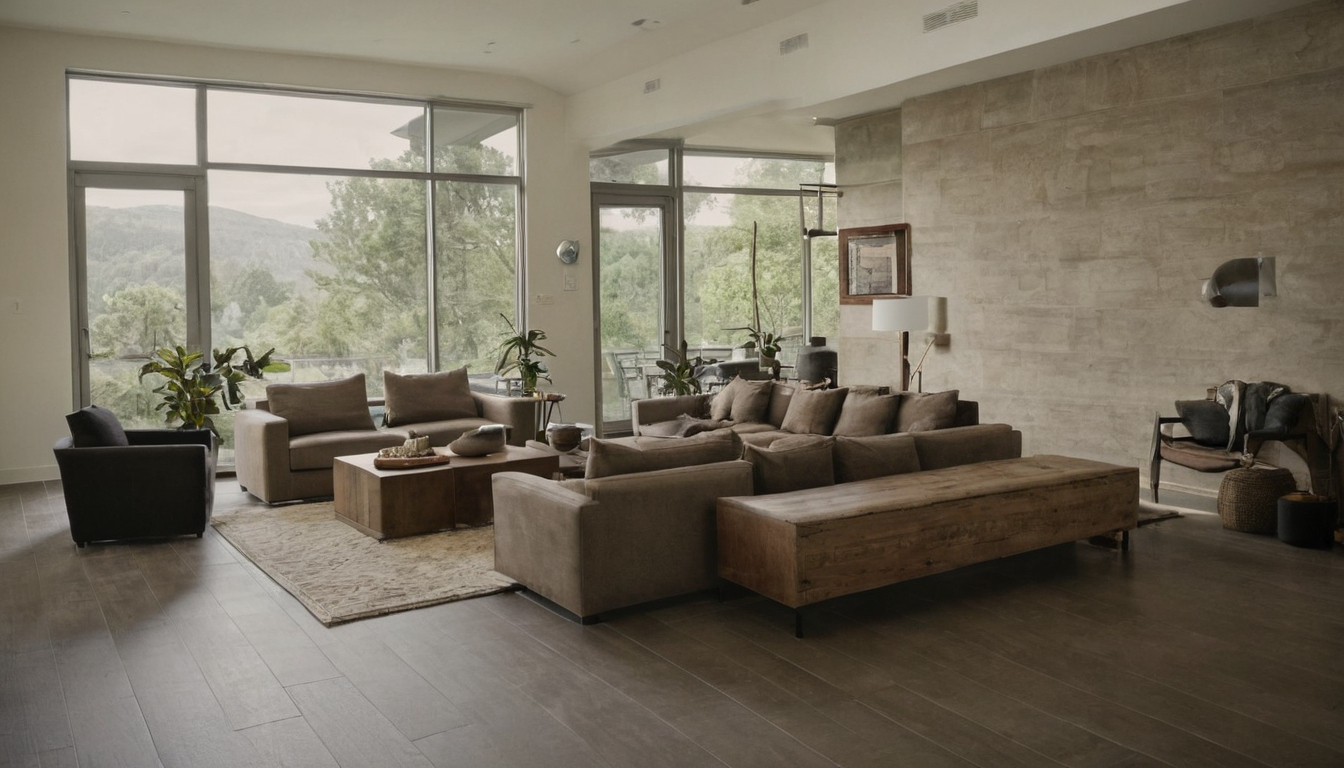
A good living room furniture idea passes five measurable layout tests before it passes the style test shown with finish, fixture, and clearance relationships visible.
The living room layout should be checked in this order: traffic, seating, TV, rug, then decor
- Traffic: draw the main route from entry to seating, hallway, balcony, kitchen edge, and windows.
- Seating depth: test sofa, sectional, lounge chair, ottoman, and recliner depth before fabric.
- TV distance: set the screen wall and sofa position before choosing the media console.
- Rug coverage: size the rug from the seating group, not from the room name.
- Operational clearances: confirm door swings, drawers, side tables, lamps, outlets, and cleaning access.
Furnishings and finishes also affect sequencing. The U.S. Environmental Protection Agency identifies building materials and furnishings as common indoor sources of volatile organic compounds, and recommends increased ventilation when products that emit VOCs are used indoors.
The subject of the plan is the usable living room, not the full architectural footprint
The measured room is not the same as the usable furniture zone. Fireplaces, sliders, columns, radiators, built-ins, HVAC grilles, low windows, and open kitchen edges all subtract from the area that can safely hold furniture.
How wide should a walkway be around living room furniture?
A living room walkway should be sized by its job: a main path needs more width than a seated reach zone, and mobility-device access needs a continuous route planned before oversized upholstery is approved.
Primary living room walkways need more width than the gap between a sofa and coffee table
Primary circulation is the route people use to cross the room, reach a hallway, move from the kitchen to the terrace, or enter the seating area. Keep this path near 36 inches where possible. Secondary circulation behind a chair, beside a sofa, or along a bookcase can often work around 30 inches if traffic is light.
Seated reach is different. The gap between a sofa and coffee table usually works best around 14 to 18 inches. That lets a seated person reach a drink or remote without turning the table into an obstacle.
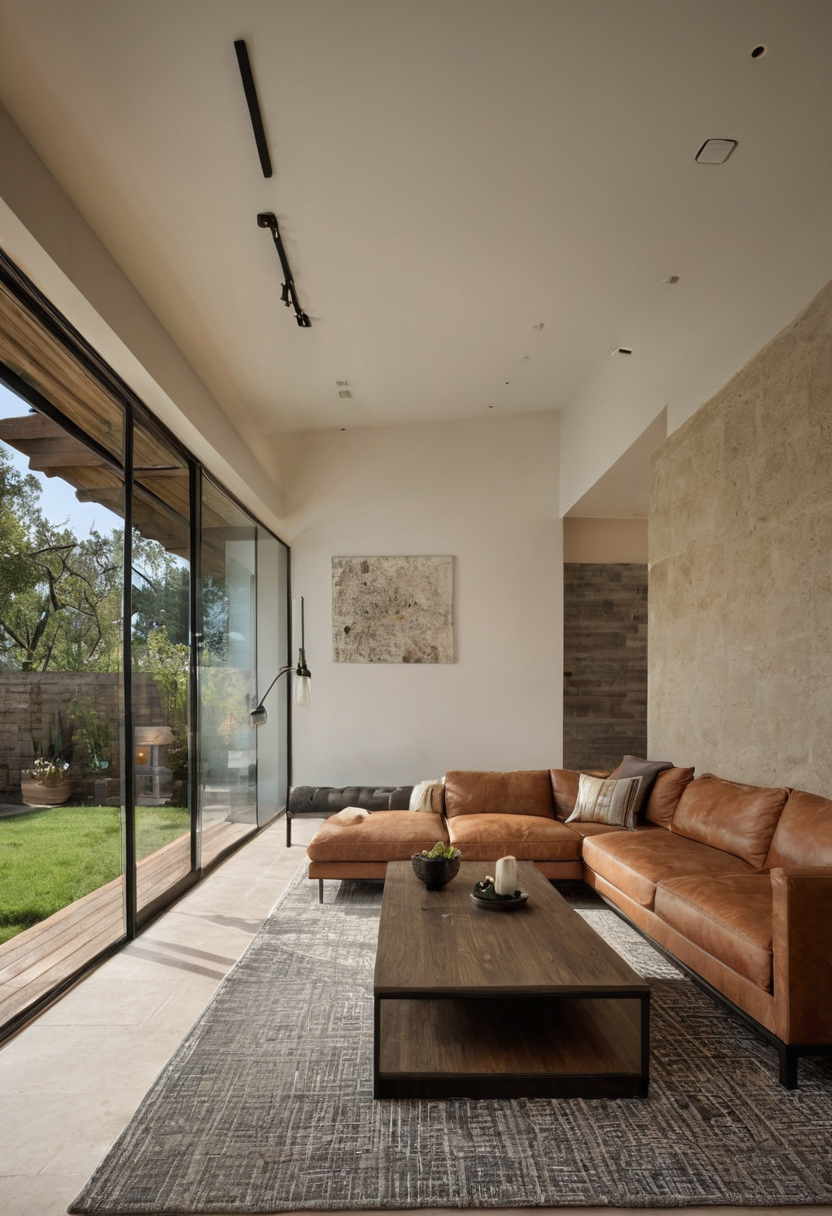
How wide should a walkway be around living room furniture shown as a planning reference for layout, scale, and material decisions.
- Main daily path: aim for about 36 inches where the room allows.
- Secondary route: about 30 inches can work for lighter traffic.
- Seated reach zone: use about 14 to 18 inches between sofa and coffee table.
- Mobility-device route: protect a wider continuous path and turning area before buying deep seating.
Door swings, balcony sliders, and media cabinet drawers must be drawn before furniture is approved
Movable elements decide whether a layout works. Draw hinged door arcs, balcony slider standing space, media drawers, drop-down fronts, chaise ends, ottomans, recliners, lamp access, outlets, and vacuum paths before approval.
Sofa, sectional, chair, and coffee table sizes should be chosen from the room’s clear dimensions
The best living room furniture ideas start with clear dimensions, then subtract walkways, door clearances, table access, and delivery constraints before choosing the sofa or sectional.
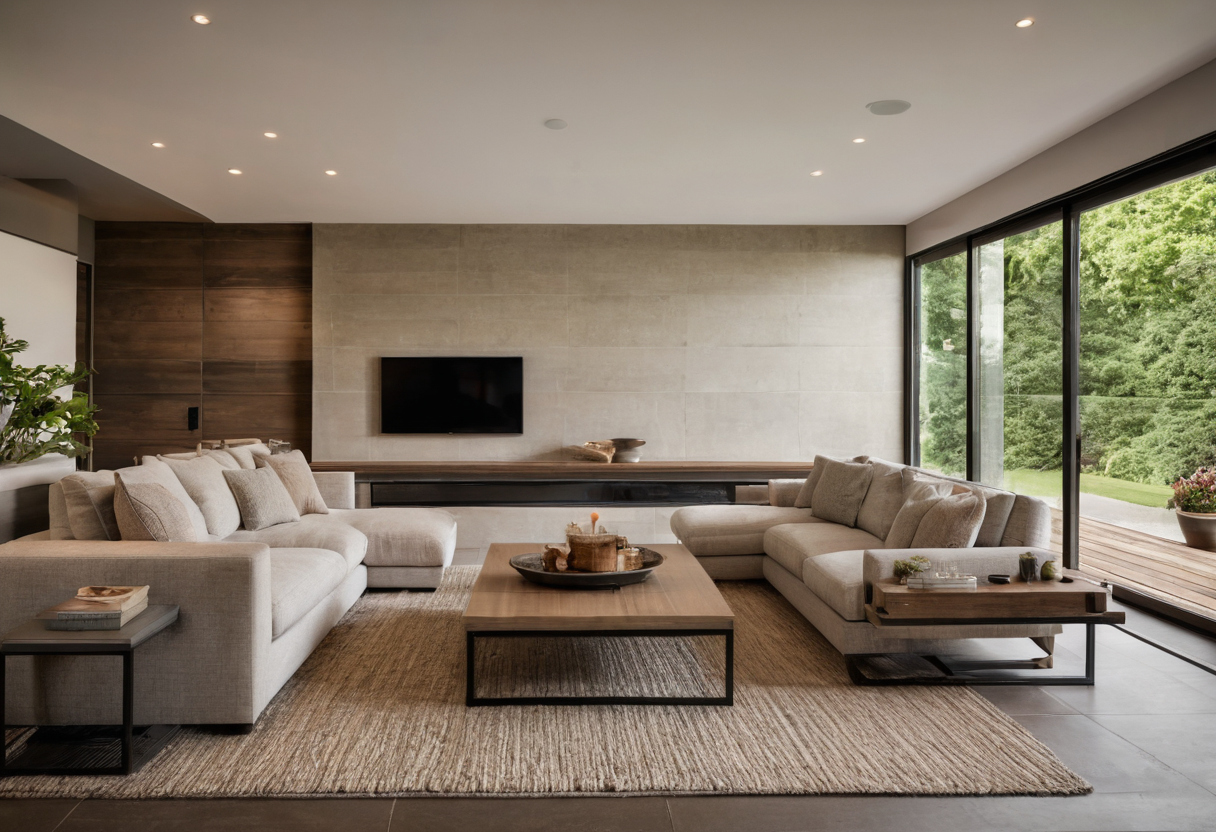
Sofa, sectional, chair, and coffee table sizes should be chosen from the room’s clear dimensions shown as a planning reference for layout, scale, and material decisions.
A sofa or sectional should be scaled by depth as much as by length
Sofa length gets attention first, but depth often decides whether the room works. Many standard sofas run about 72 to 96 inches long, with apartment sofas closer to 60 to 78 inches. Depth commonly falls around 36 to 44 inches, and that difference is large in a narrow room.
A 36-inch-deep sofa can leave a usable route where a 44-inch-deep sofa turns the same plan into a squeeze. Sectionals add risk because a chaise or return may project about 60 to 70 inches into the room, while larger L-shaped sectionals can occupy 90 to 120 inches or more along two walls. Tape the full footprint before ordering.
The coffee table should sit within reach without becoming a traffic obstacle
The coffee table is a reach zone, not a floating decoration. A practical sofa-to-coffee-table gap is usually about 14 to 18 inches. Coffee table height should sit close to the sofa seat height, often within an inch or two. For length, one-half to two-thirds of the sofa length usually balances access without blocking the seating group.
Accent chairs should be tested for conversation distance and turning clearance
Accent chairs often fail because they are selected as visual pairs before the plan proves they can turn, recline, or be angled. A typical accent chair may occupy roughly 28 to 36 inches in width and depth, while a lounge chair with an ottoman can take much more area.
TV distance should set the media wall and seating position before the rug is ordered
In a TV-focused living room, screen size and viewing distance should be resolved before the media console, rug, or sectional is purchased.
A 55-inch, 65-inch, or 75-inch TV changes the sofa position and circulation zone
A 4K television can usually sit closer to the sofa than an older low-resolution screen, but comfort still depends on viewing angle, seated eye height, and room use. As a practical planning range, a 55-inch TV often works around 6 to 8.5 feet from the main seat, a 65-inch TV around 7 to 10 feet, and a 75-inch TV around 8 to 11.5 feet.
Physical width matters too. A typical 55-inch TV is about 48 inches wide, a 65-inch TV about 57 inches, a 75-inch TV about 65 inches, and an 85-inch TV about 74 inches, before speakers, sconces, art, or cabinetry. If the sofa must move back to suit the screen, the walkway behind it may disappear.
The media console should be wider than the TV but shallow enough for the walkway
The media console should usually read wider than the television. A console roughly 12 to 24 inches wider than the TV overall often looks settled. Depth is the common layout failure: many media units run about 15 to 20 inches deep, and deeper cabinets can pinch a narrow route. Draw drawers, hinged doors, lift-up fronts, soundbars, cable plates, and ventilation gaps before approval.
Glare and lighting should be checked before fixing the sofa and TV wall
Glare testing should happen before the rug is ordered because glare can reverse the preferred wall. A TV opposite a bright window may fail during afternoon viewing, while a TV beside a window can catch angled reflection unless window treatments, lamp positions, and dimming are planned together.
The seated eye line should land near the screen center for normal viewing, often around 40 to 44 inches from the floor in many sofa layouts, adjusted for seat height and reclined posture. Wall mounting above a fireplace usually pushes the screen high, so test neck angle first. For more context, living room lighting affects TV glare and furniture placement.
The living room rug should connect the seating group without stealing walkway clearance
A living room rug works when it relates to the furniture group, clears doors and traffic paths, and supports maintenance rather than floating under only the coffee table.
An 8×10 or 9×12 rug should be chosen from furniture placement, not from the room name
An area rug should be sized from the seating rectangle. A 5×8 rug can work in a tight apartment if the coffee table and front edge of the sofa relate to it, but it often looks undersized under a full sofa and two chairs. A 6×9 rug gives more room for a small sofa group. An 8×10 rug usually suits a standard sofa with front legs on the rug and a pair of chairs partly anchored. A 9×12 rug often fits larger sofas, sectionals, or all-legs-on arrangements.
The front-legs-on rule connects sofa and chairs without consuming the whole floor. The all-legs-on approach feels more settled in larger rooms, but it needs enough bare floor at the perimeter so the rug does not collide with door swings, cabinets, radiators, or the main route.
Rug edges should avoid door swings, chair drag zones, and tight main walkways
Rug placement fails when the edge lands where feet pivot, chairs drag, or a door sweeps across the pile. Before ordering, tape the rug outline and include pad thickness. A low-profile pad can stabilize the rug, but a thick pad near a doorway can create a rub point or trip edge.
High-traffic living areas also need a maintenance plan. For adjacent natural stone, the Natural Stone Institute recommends neutral cleaners, stone soap, or mild liquid dishwashing detergent with warm water, and warns that abrasive scouring powders or creams can scratch stone surfaces: Natural Stone Institute care guidance.
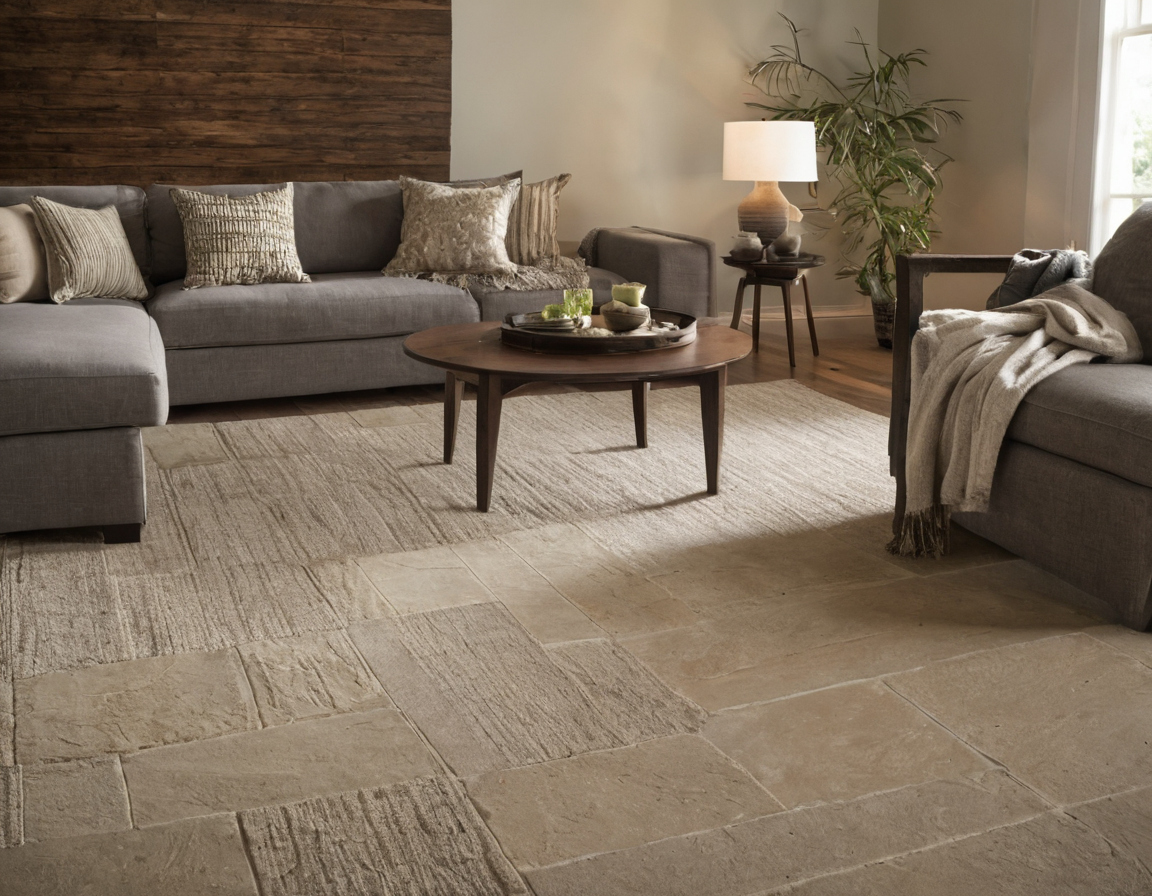
The living room rug should connect the seating group without stealing walkway clearance shown as an editorial reference for proportion and finish coordination.
Lighting affects rug safety as well as atmosphere. ENERGY STAR states that qualified LED lighting uses at least 75 percent less energy and lasts up to 25 times longer than incandescent lighting: ENERGY STAR LED lighting guidance.
Small, long, and open-plan living rooms need different furniture layout decisions
A layout that works in a square room can fail in a narrow rectangle, studio apartment, or open-plan kitchen-living space, so the furniture idea must respond to room type and traffic direction.
A small living room usually needs fewer pieces with tighter but still usable clearances
A small living room should not receive a shrunken version of a large-room plan. Start with an apartment sofa, a compact media unit, and one flexible table strategy, such as nesting tables or a small oval coffee table. A sofa depth near 34 to 38 inches often preserves more floor than a lounge-depth sofa.
The first pieces to omit are usually the second armchair, oversized ottoman, deep console behind the sofa, and decorative floor basket in a walkway. Keep seated reach at the coffee table, but do not sacrifice the route from the entry to the sofa, window, or balcony door. For compact-room thinking, use space-planning tactics for making a small room feel larger before buying extra accent pieces.
A long rectangular living room should avoid a single stretched furniture line
A long rectangular room often fails when every piece is pushed against the long walls and the seating becomes a corridor. If the TV sits on one short wall, float a sofa or compact sectional across from it and keep a clear route along one side. If the fireplace sits on a long wall, center the seating group there and treat the unused end as a reading chair, desk, or storage zone.
An open-plan living area should use the sofa back, rug, and lighting to define the zone
An open-plan living area needs boundaries without walls. The sofa back can mark the living zone, the rug can hold the seating group, and lighting can separate dining, cooking, and lounging functions. Clearance matters most where dining chairs pull back toward living room seating, especially if that path also leads to a kitchen, terrace, or hallway.
The final living room furniture checklist should be completed before payment, delivery, or installation
The final check should confirm that each furniture piece fits the living room, the route into the home, and the household’s actual use before deposits, delivery slots, or installation dates are approved.
The delivery route should be measured as carefully as the living room floor plan
The delivery route is part of the layout. A sofa that clears the living room wall may still fail at a stair turn, elevator door, tight vestibule, or low ceiling.
- Measure the room: finished wall dimensions, ceiling height, radiator projection, window sill height, outlets, floor vents, and baseboards.
- Measure the route: exterior doors, interior doors, hallways, stair width, landings, elevator cab size, and sharp turns.
- Flag high-risk pieces: one-piece sectionals, sleeper sofas, recliners, deep lounge chairs, long media consoles, stone tables, glass tops, and oversized rugs.
- Check operating space: recliner extension, sleeper pullout length, drawer depth, media door swing, robot vacuum access, and rug-cleaning space.
Custom furniture and made-to-order upholstery should not be approved until the layout is locked
Custom sofas, modular sectionals, built-in media units, and made-to-order upholstery should move to payment only after the plan confirms dimensions, fabric, finish, cushion depth, leg height, module direction, outlet locations, cord paths, anchoring points, and delivery access.
Many custom, made-to-order, final-sale, and assembled pieces have limited cancellation or return options once production starts. For built-ins and wall-mounted media units, shop drawings should show TV size, bracket location, ventilation gaps, cable management, blocking, and anchoring before fabrication. If the project includes bespoke work, review custom furniture approvals and lead times before releasing deposits.
FAQ
What is the best walkway width for a living room?
A main living room walkway should be near 36 inches where possible. Secondary routes can often work around 30 inches if traffic is light. A room that must support mobility devices needs a continuous route and turning area.
What is the 2 3 rule in living room furniture planning?
The 2 3 rule usually means a coffee table or rug should relate to about two-thirds of the main sofa length. Treat it as a proportion guide, not a fixed rule. Walkways, door swings, and room shape still control the final size.
How much space should be between a sofa and a coffee table?
Leave about 14 to 18 inches between a sofa and coffee table in most living rooms. This keeps drinks and remotes within reach while preserving knee room and passage through the seating group.
How far should a sofa be from a 65-inch TV?
A 65-inch 4K TV often works around 7 to 10 feet from the main seat, depending on viewing preference, screen height, glare, and whether the room is used for casual TV or movie-style viewing.
What rug size works best under living room furniture?
An 8×10 rug often works for a standard sofa and chairs with front legs on the rug. A 9×12 rug suits larger seating groups or sectionals. A 5×8 or 6×9 rug is usually better for compact rooms.