
A rectangular dining table that fits when closed can still fail during a gathering. Buy to the fully extended, fully occupied footprint, including pulled-back chairs and protected routes, or an end chair may collide with a sideboard drawer just as dinner is served.
How large can a rectangular dining table be when every extension leaf is open?
The maximum table size equals the clear room area left after subtracting fixed obstructions, operational furniture, occupied-chair zones, and circulation that must remain available.
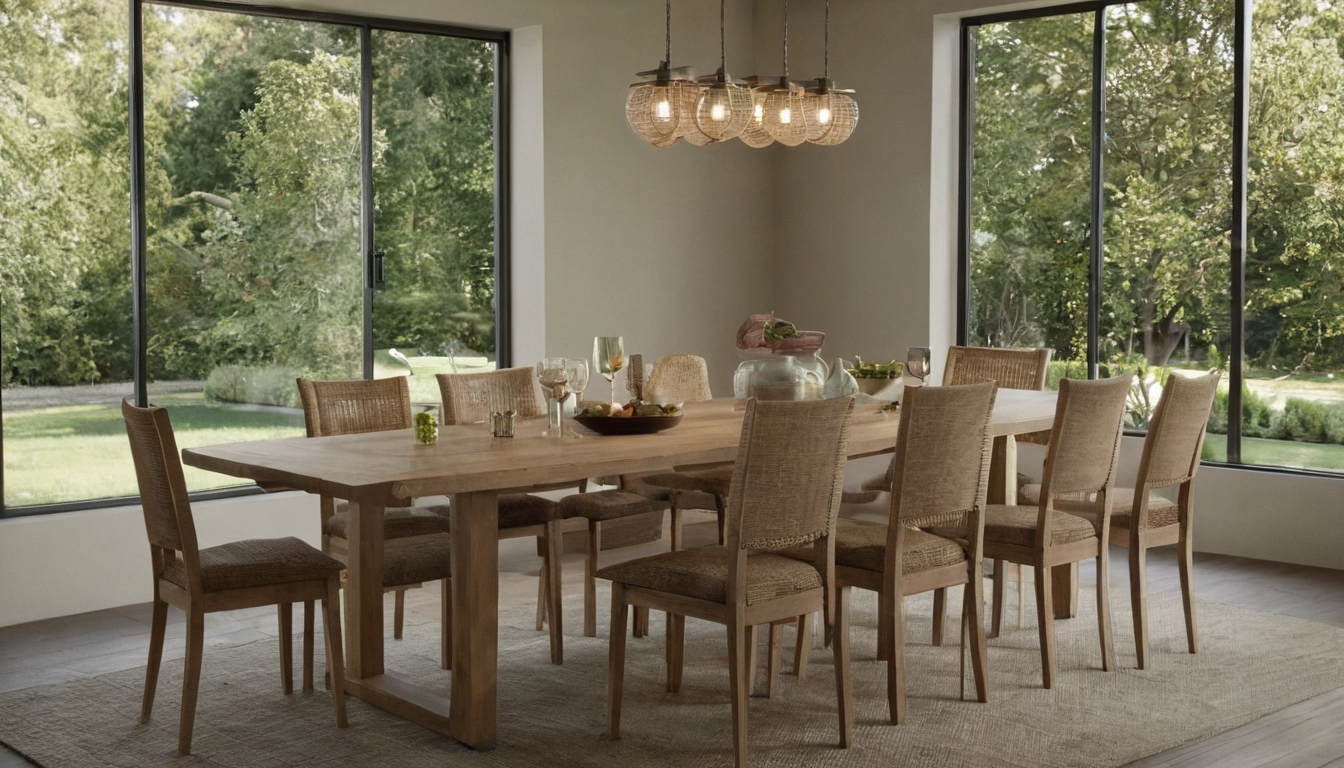
How large can a rectangular dining table be when every extension leaf is open shown with practical context cues.
The extended rectangular dining table must be tested as table length plus occupied-chair and circulation zones
Use the manufacturer’s exact dimensions for closed, partial, and fully open positions. In imperial units, calculate open table length + chair-use zone at each end + protected route, then repeat across the width. Apply the same formula in millimetres for a metric plan. Measure the selected chairs both occupied and pulled back.
| Configuration | Top size | Occupied footprint | Circulation result | Furniture moved |
|---|---|---|---|---|
| Closed | Maker’s closed dimensions | Top plus daily chairs | Normal route remains open | None |
| Partial | Permitted leaf setting | Top plus occupied chairs | Verify serving route | Possibly spare chairs |
| Fully open | Maximum specified dimensions | Top, chairs, pullback, route | Must pass gathering test | Sideboard or console if planned |
Human dimensions cannot be reduced to tabletop size. A 2012 anthropometry study of 194 university students aged 18 to 30 measured elbow distance, hip breadth, popliteal height, and other dimensions to assess furniture fit. Its classroom findings are not universal dining-room dimensions, but they illustrate why actual users and chairs matter.
Which room measurements reduce the usable dining area?
Measure between finished surfaces, then deduct baseboards, projecting trim, radiators, registers, columns, fireplace edges, sideboards, cabinet fronts, and door swings. Mark the kitchen route that must remain open during dinner.
For an accessibility-specific project, the DOJ 2010 ADA Standards, effective March 15, 2012, specify a 30-by-48-inch clear floor space and accessible dining surfaces 28 to 34 inches high under applicable conditions. Finish and storage planning also matter: the EPA advises ventilation around VOC-emitting products and prompt correction of damp areas. With the available footprint established, seating capacity becomes the next test.
How wide and long should a rectangular dining table be for the intended number of diners?
Table length depends on chair width, elbow room, end seating, and base placement; width must support opposing settings and the intended serving method. An advertised ten-seat label is a claim to verify.
How much usable table edge does each dining chair require?
Allow roughly 22 to 24 inches of edge per compact armless chair as an initial planning range, then measure each chair at its widest point. UC Berkeley’s anthropometry guidance explains that furniture design depends on the intended population and percentile. It identifies ANSUR and CAESAR as major datasets and distinguishes average, fifth-percentile female, and 95th-percentile male references.
- Chair risk: arms or broad backs overlap an adjacent place.
- Corner risk: an end diner conflicts with the first side chair.
- Base risk: legs, trestles, aprons, or slides obstruct knees.
The university study cited above found substantial mismatches between its student sample and classroom furniture, although seat depth suited 84.6 percent of participants. That result concerns those students and furnishings, not dining chairs generally.
How long does a rectangular dining table need to be to seat ten people?
A ten-person dining room table rectangle often needs about 96 to 120 inches of usable length. Four side chairs per side plus two end chairs may work near the shorter end; five chairs per side usually require more. Confirm every position with the actual chairs and fully extended under-table drawing.
How wide should a rectangular dining table be for place settings and serving dishes?
About 36 inches can support compact meals, while roughly 40 to 44 inches provides more separation and a center zone for shared dishes. Mock up formal settings and platters. Historical 1991 ADA provisions addressed fixed tables and restaurants in covered public and commercial facilities until superseded, not ordinary private dining rooms.
How much clearance does an extended rectangular dining table need around occupied chairs?
About 36 inches may suit occasional seating against an inactive wall, while a serving or through-route often needs roughly 44 to 48 inches as a planning range. Test clearances with diners occupying the chairs.
When is a rectangular dining table too big for the room?
- Can every diner sit and stand without moving the table?
- Can doors open and required exits remain unobstructed?
- Can someone carry a platter behind occupied chairs?
- Can sideboard drawers open without striking chair backs?
The U.S. Access Board ADA standards address dining surfaces, routes, clear spaces, turning space, egress, walking surfaces, and doors in covered facilities. DOJ standards generally cover non-transportation facilities, while DOT standards govern public transportation facilities. Ordinary private homes are not automatically governed in the same way; jurisdiction and project use control.
Can a dining chair back into a wall, sideboard, or kitchen route?
An inactive wall can accept the tightest clearance. A sideboard needs chair space plus its complete drawer or door projection. An active kitchen route needs occupied-chair space plus protected passage. If circulation works, inspect whether the extension mechanism preserves the promised seats.
A dining extension table’s mechanism and base determine whether every advertised seat is usable
A dining extension table can fit the room yet perform poorly if leaf seams divide settings, support legs occupy chair positions, or the mechanism restricts loading.
Do extension leaves create unusable seating positions?
Check drawings for aprons, braces, pedestals, trestles, slides, and moving legs in every configuration. Place the intended chairs at each advertised position and verify knee clearance, foot space, and a straight approach.
Can one extension leaf be used without opening the dining table fully?
Use a partial extension only when the operating manual permits that combination. Confirm leaf sequence, resulting length, support arrangement, locks, and approved loading rather than assuming every leaf works independently.
Where should removable dining-table leaves be stored?
Store leaves in a dry, protected location that permits safe handling. Follow maker instructions for orientation, wrapping, humidity, temperature, and acclimation. A damp basement, garage, or radiator-side closet may expose timber and finishes to damaging changes.
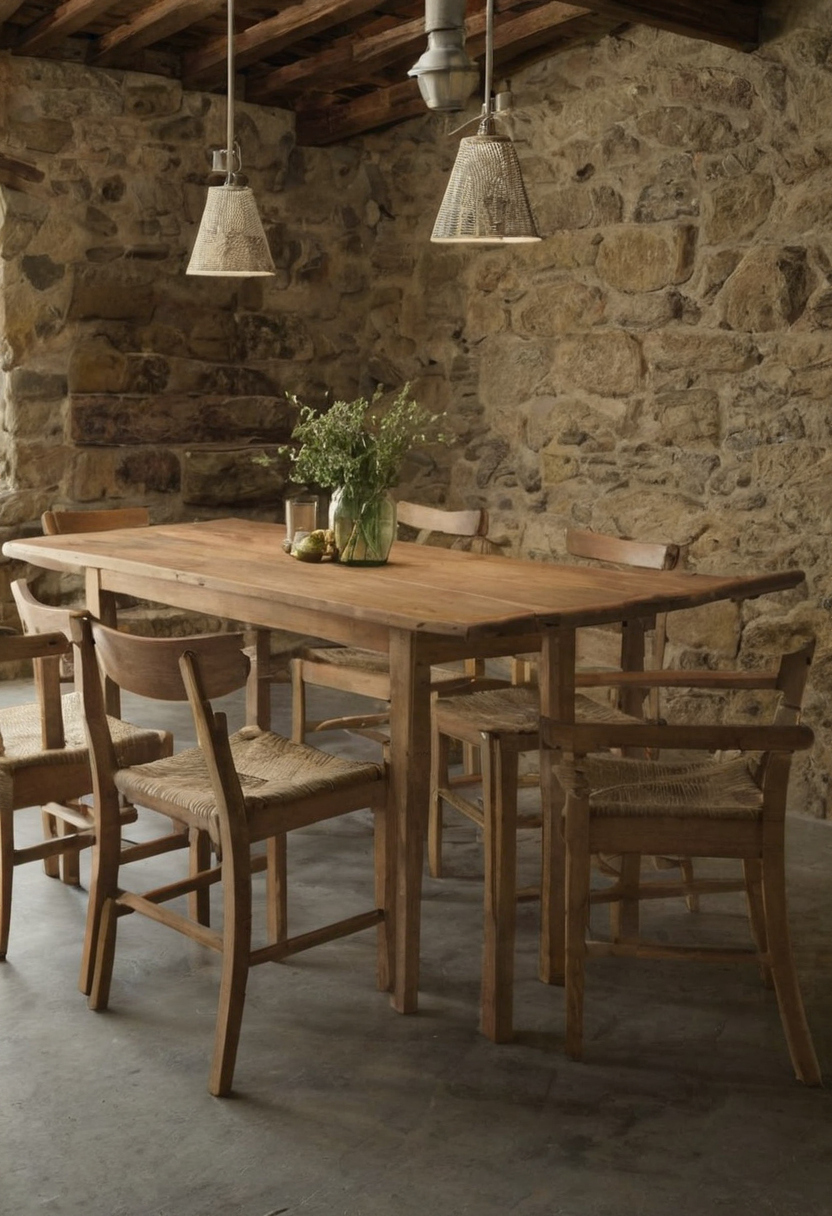
A dining extension table’s mechanism and base determine whether every advertised seat is usable shown with practical context cues.
For made-to-order work, settle storage, joinery, hardware, and operation during custom furniture approval and lead-time requirements. The accepted mechanism must then coordinate with the room’s lighting and finishes.
The fully extended rectangular dining table must still align with lighting, rugs, and nearby furniture
The extended table should remain functionally related to its pendant, rug, sideboard, and serving route, although perfect centering in every configuration may be impossible.
Should a pendant be centered over the closed or fully extended dining table?
Center the pendant for the most-used configuration if its light distribution still covers the open top. Check fixture dimensions, beam spread, suspension adjustment, and mounting limits. Swagging, track mounting, or junction-box relocation requires suitable installation and qualified electrical review. ENERGY STAR qualified LED lighting uses at least 75 percent less energy and lasts up to 25 times longer than incandescent lighting.
Should the dining-room rug fit the table when every leaf is open?
The rug should support chair legs while diners are seated and pulling back. If a full-extension rug overwhelms the daily layout, no rug is often more practical than an edge that catches chairs. A floor test reveals whether that compromise works.
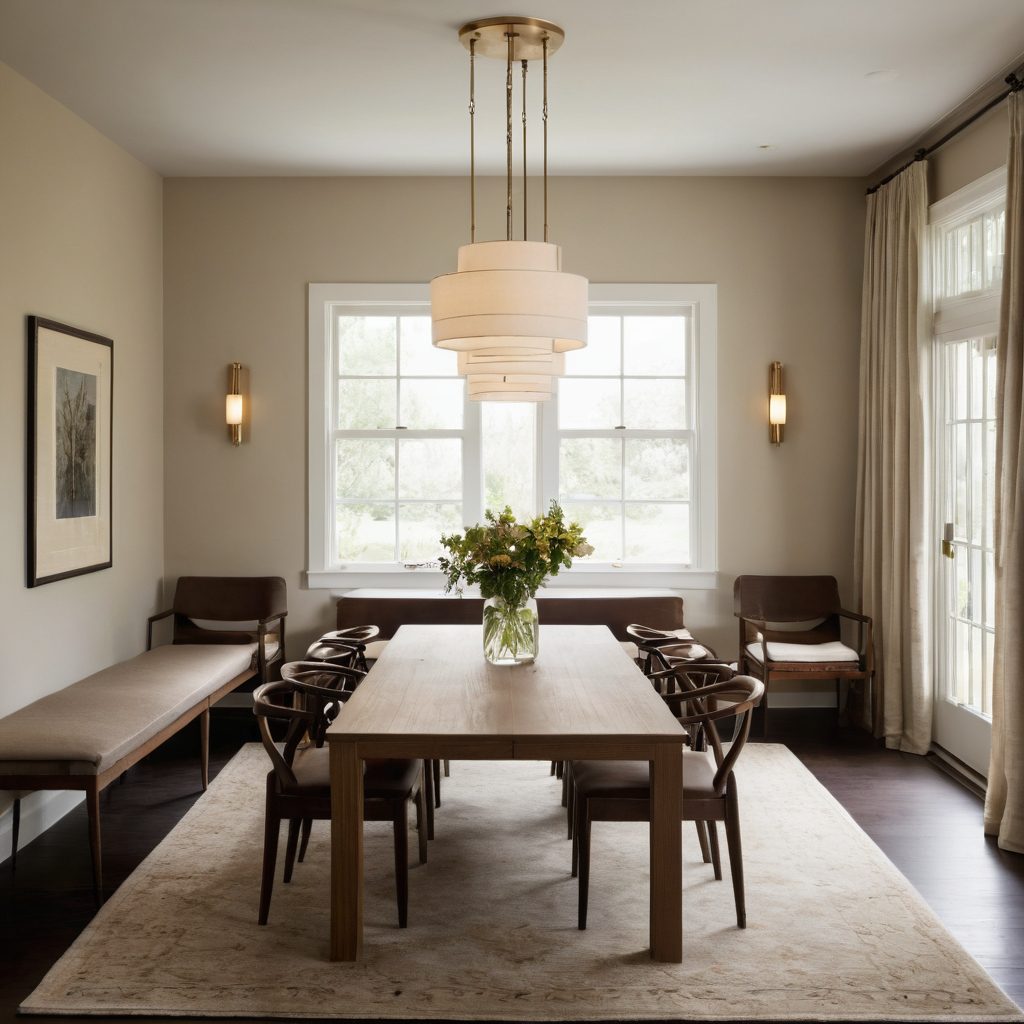
The fully extended rectangular dining table must still align with lighting, rugs, and nearby furniture shown as an editorial reference for proportion and finish coordination.
A full-scale floor test is the safest way to approve a rectangular dining table before ordering
Mark the exact closed, partial, and open dimensions on the floor, add chair templates, and rehearse sitting, standing, serving, and opening nearby storage.
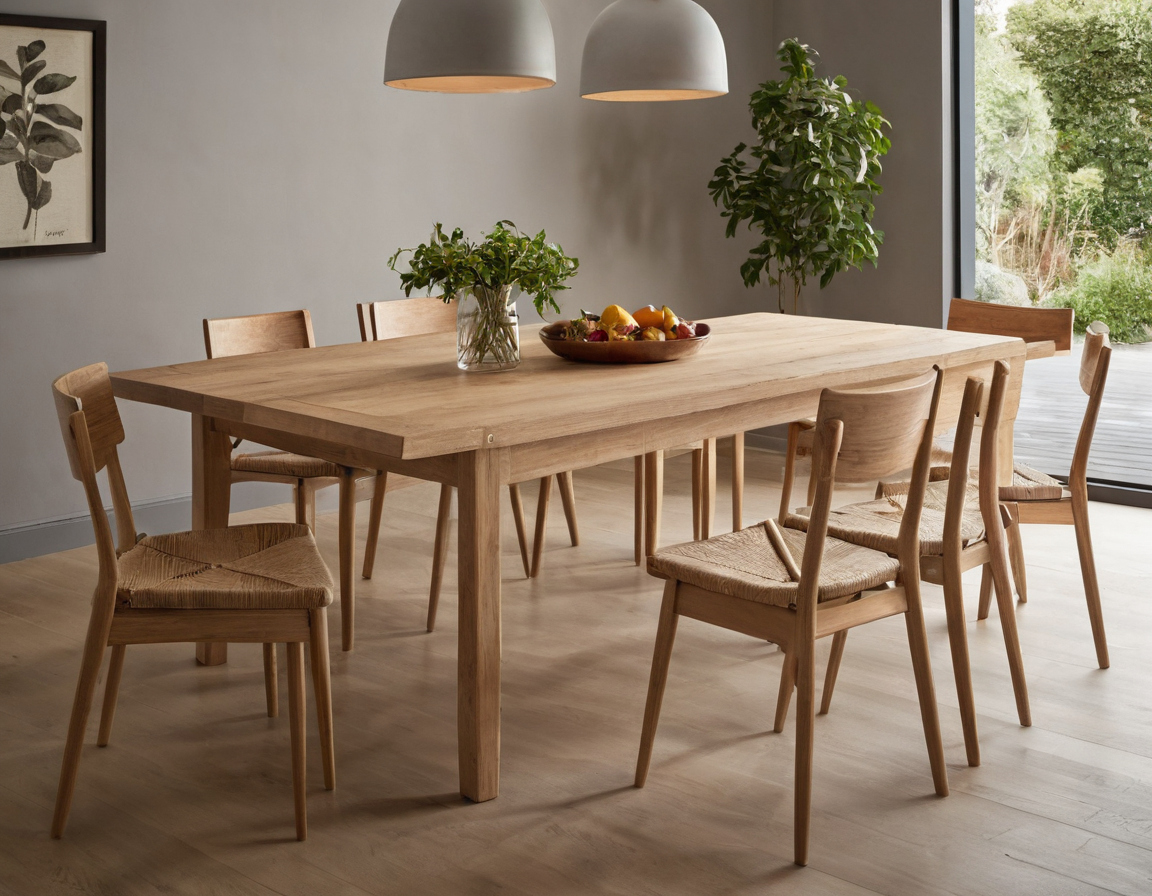
A full-scale floor test is the safest way to approve a rectangular dining table before ordering shown as an editorial planning reference.
How should a dining room be mocked up for closed, partial, and full extension?
Locate aprons, pedestals, trestles, and supports from product drawings. Show chair width, occupied projection, and pullback travel at every seat. Test doors, drawers, serving routes, and alternative orientations using the same logic as testing furniture layouts with real walkway widths. Anthropometric planning should reflect the intended population, task, and layout rather than only an average user.
What must be confirmed before ordering a custom dining extension table?
Approve drawings for every configuration, support positions, seating and loading limits, leaf storage, finish samples, hardware, warranty terms, replacement parts, and return restrictions. Verify packaged dimensions, weight, assembly space, floor protection, installers, doorways, stairs, elevators, and turns. The EPA identifies furnishings, paints, varnishes, and waxes as potential indoor VOC sources, so review finish and ventilation requirements. Approve the open, occupied plan first, then accept the closed table.
Frequently asked questions
What does the four-inch rule for dining seating mean?
The informal rule generally compares chair width with the edge allocated to it, leaving several inches for separation. It is not reliable by itself because chair arms, diners, table corners, aprons, and supports can consume that allowance.
How can you tell whether a rectangular dining table is too big when open?
The table is too big if occupied chairs prevent door, storage, serving-route, or required circulation use. Test those operations at full scale rather than judging the empty tabletop.
Can extension leaves be stored in a garage, basement, or closet?
Only if the location satisfies the manufacturer’s humidity, temperature, orientation, and protection instructions. Stable indoor storage is generally safer than a damp basement or garage with strong seasonal changes.